
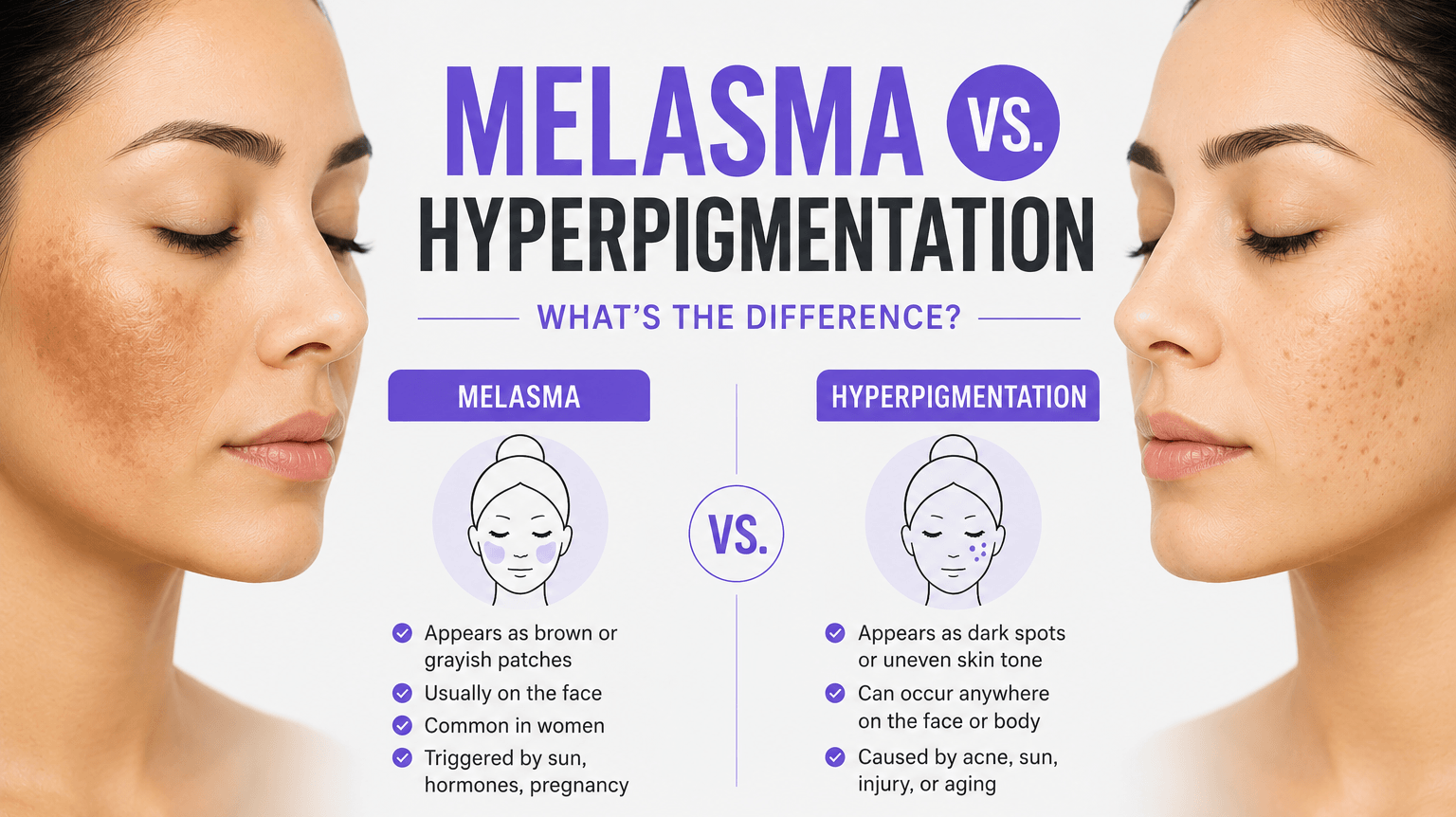

On the surface, melasma and hyperpigmentation are similar conditions. They both cause some patches of skin to look darker than the surrounding skin. However, they are caused by different triggers and require different treatment approaches. At Donna Bella Laser MedSpa, we take the time to understand the root cause of any problem before we recommend treatments. We have a complete breakdown of the differences between these two skin conditions.
What is Melasma?
Melasma is, in fact, a type of hyperpigmentation that usually affects women, especially during hormonal issues, pregnancy, or when they take contraceptive medication. You may notice some brown or dark patches on your forehead, nose, upper lip, or cheeks. These patches look flat and usually have a similar texture to the rest of your skin.
The cause? Typically an overproduction of melanin in that specific area. Melanin is a compound that gives your skin, hair, and eyes color. Spots with excess melanin often appear darker.
Melanin is produced by melanocyte cells and is essential to protect the skin from sun damage. This cell is influenced by hormonal changes, especially hormones like progesterone and estrogen.
Melanin is good in reasonable quantities, but excess melanin can cause pigmentation. While the condition isn’t harmful in any way, it can make people feel self-conscious and impact their quality of life.
Common Reasons for Melasma
Understanding the common reasons for melasma can help you take some preventive measures and ensure your skin has better protection and care. Let’s look at some of the most common causes:
1. Sun Exposure
We’re all familiar with the damage the Sun’s ultraviolet rays can cause. In people prone to melasma, excessive sun exposure can lead to overproduction of melanin as melanin is designed to protect the skin from sun damage. However, this production can be uneven, leading to patches. Sun exposure can also damage the skin and cause inflammation.
2. Hormones
Hormonal changes during pregnancy, puberty, menstruation, menopause, or hormone therapy can affect the levels of melanin in the skin. The most common culprits usually are estrogen, progesterone, thyroid hormones, and cortisol.
3. Skincare Products
Skincare can also cause melasma and hyperpigmentation, especially if your skin reacts poorly to strong actives. Ingredients such as retinoids, azelaic acid, hydroquinone, kojic acid, or vitamin C can cause adverse reactions. That’s one of the reasons why you need to do a patch test before using these productions. Some skincare ingredients also increase your sensitivity to the sun’s UV rays.
4. Medications
Medicines like oral contraceptives, hormone replacement therapy, antidepressants, antimalarials, and even some antibiotics can lead to adverse reactions. They can affect blood flow to your skin and cause pigmentation.
Genetics also play a factor in melasma as some people are more likely to develop it than others. Your skin may react to these factors more often or more severely than your peers.
What is Hyperpigmentation?
Hyperpigmentation is any sort of discoloration or spot that is caused by excessive melanin production. As you may have guessed, melasma falls under this category. However, there are other types of hyperpigmentation as well. They include:
1. Age Spots
These are brown or dark spots on the skin. They usually appear on the face and arms, and sometimes can appear on the legs. Any area that’s regularly exposed to the sun can develop age spots.
2. Post-Inflammatory Inflammation (PIH)
This is one of the most common types of hyperpigmentation. It happens when your skin is injured in some way due to inflammation or infection. The spots happen after acne or eczema and are usually temporary. These spots heal in a few months, through deeper acne scars can take years to heal.
3. Sun Spots
Like age spots, sun spots also appear after sun exposure. However, sunspots or liver spots often happen to people who have sensitive skin or have endured excessive exposure to the sun. You can easily avoid this by applying sunscreen generously and wearing hats or caps when you’re out in the sun.
These skin issues are treatable and usually involve applying some sort of topical cream or solution. If you have deep hyperpigmentation affecting the dermis, you may need more invasive treatments.
What is the Difference Between Melasma and Hyperpigmentation?
The most important difference is the durability of this affliction. Melasma typically lasts for a long time if it remains untreated. However, other types of hyperpigmentation can last for just a few months.
On the other hand, melasma responds well to topical treatments like creams and gels. These medications are more likely to fade any spots or dark patches with regular application.
Other forms of hyperpigmentation are more difficult to treat. Some of them are pitted and the result of a deeper injury. We usually recommend middle to deep chemical peels or treatments like microneedling for PIH.
What are the Common Treatments for Melasma?
1. Topical Medications
Topical creams are often the first treatment option. Most people choose invasive treatments only after topical solutions prove ineffective for their case. Some of the most common topical solutions include:
- Hydroquinone: A skin-lightening agent that you can apply on the patches directly to fade spots.
- Azelaic Acid/Tretinoin: Also a skin-lightening agent that can reduce dark spots with regular application.
- Fluocinolone Acetonide, Hydroquinone/Tretinoin (Combination Cream): This cream is often prescribed for melasma but we recommend coming in for a consultation first.
2. Laser Therapy
Laser beams can be used to remove the dark marks on the skin. There are ablative and non-ablative laser treatments to address different levels of melasma.
Preventive measures like applying sunscreen and avoiding food items with high estrogen levels can also help you avoid melasma.
What are the Common Treatments for Hyperpigmentation?
1. Acids
Face acids like AHA, BHA, PHA, etc, can be used to help treat hyperpigmentation. The most popular options include:
- Kojic acid
- Salicylic acid
- Vitamin c
- Azelaic acid
- Alpha hydrozy acid
Most of these acids are available over the counter and in different formulations from different brands.
2. Retinoids
Retinol is a commonly prescribed solution to hyperpigmentation. It is derived from vitamin A and is a fairly strong active. It can penetrate deep into the skin to remove spots and pigmentation. However, the over-the-counter versions are slightly weaker and less effective. If you have deep pigmentation, we recommend getting a retinol prescription.
3. Chemical Peels
Chemical peels are a more invasive and intense solution for hyperpigmentation but they can be very effective. They remove a layer of your skin and allow new skin to form over the affected area, which can help reduce hyperpigmentation.
Other options include more sophisticated treatments like dermabrasion, microneedling, and IPL laser treatments. If you’re concerned about hyperpigmentation or worried about whether you have melasma vs. hyperpigmentation, we can help.
Drop by for a consultation and let our experts provide a detailed report on your skin. They will come up with the best solutions to treat your melasma or hyperpigmentation safely.